
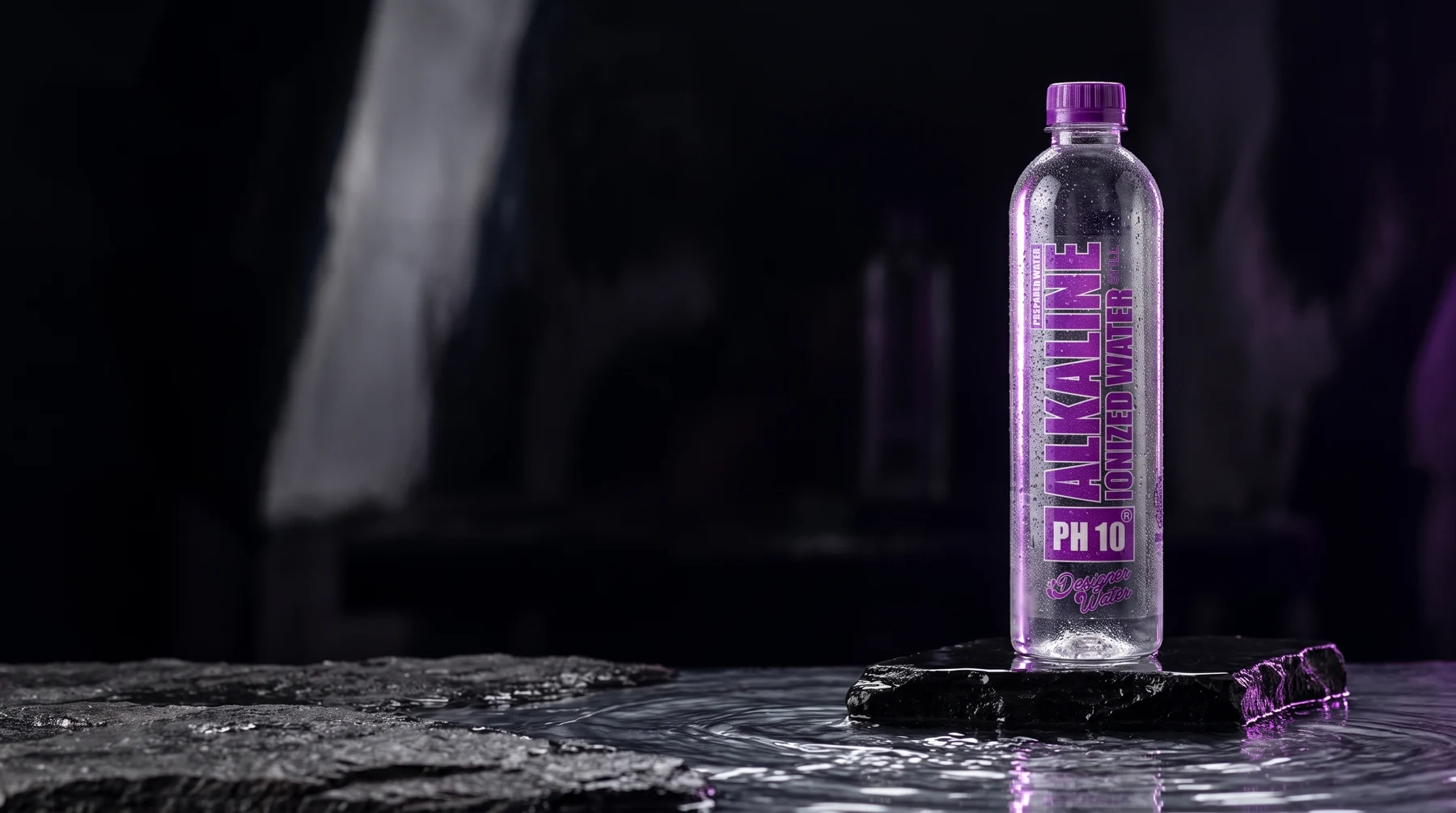
THE WATER. THE DIFFERENCE.
Alkaline water benefits.
The facts.
Get to know the smooth taste, calcium, magnesium and potassium in Designer Water pH10. See how we make it, what our taste survey found, and which case suits you.
See what’s in the bottle Compare bottle sizes and pricesDESIGNER WATERMADE IN SOUTH AFRICA
01 / THE EVERYDAY UPGRADE
Good water is
worth choosing.
A bottle you reach for at your desk. A cold glass at the table. Your water is part of every day. We make ours with a distinctive taste, calcium, magnesium and potassium, and a pH of 10.
02 / INSIDE THE BOTTLE
More considered.
From the start.
10
Our signature pH
pH describes how acidic or alkaline water is. Designer Water pH10 is alkaline water. It is a product characteristic, not a promise to change your body’s pH.
14
Stages of care
Your water goes through 14 stages of purification and mineralisation, including reverse osmosis and ozonation, before it’s bottled in Midrand.
H₂
Infused at bottling
Molecular hydrogen infusion and reduced ORP are features of our process at the time of bottling.
03 / KNOW YOUR WATER
The minerals.
In plain sight.
Magnesium
Potassium
Calcium, magnesium and potassium are part of Designer Water pH10’s mineral profile. Check your bottle’s mineral analysis for the quantities in mg/L.
04 / LET TASTE DO THE TALKING
96.9%
The choice
was theirs.
378 of 390 non-customer respondents preferred Designer Water in our July 2025 survey.
Company-run, sighted survey. Not a blind or independent study. Results relate to Designer Water still water.
Read customer reviews ↗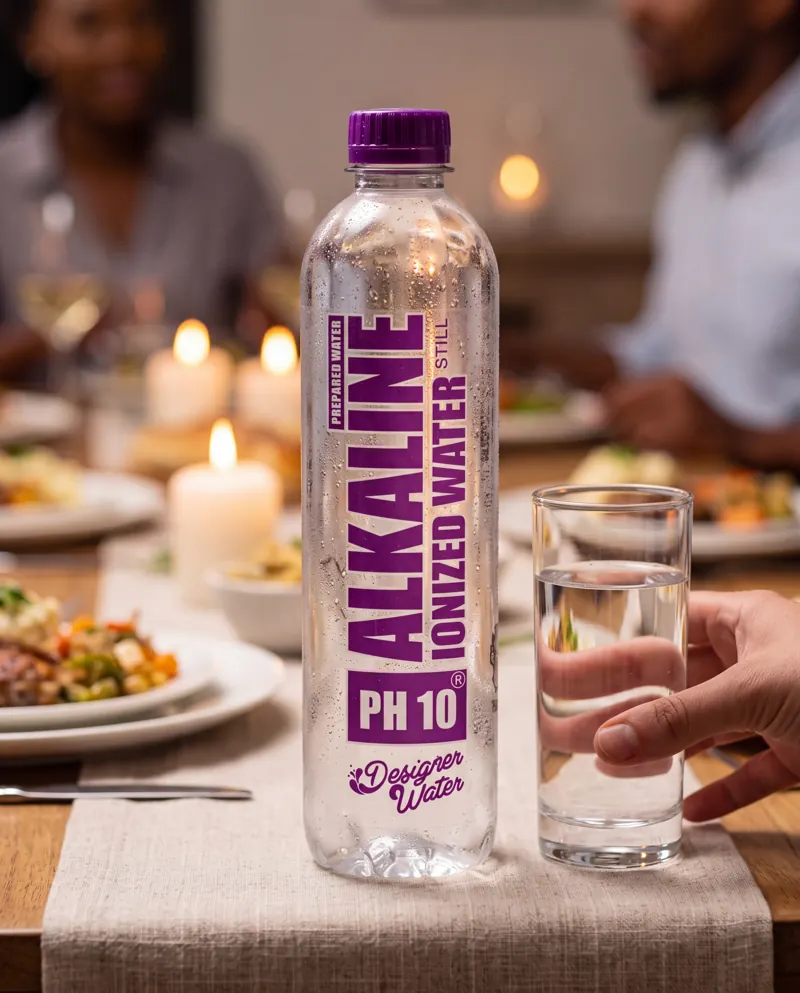
05 / A SIMPLE DAILY CHOICE
For your table.
Your desk.
Your day.
For the table, choose the 5L case: four bottles and 20 litres for R220. For your work bag or lunchbox, choose 24 × 500ml for R290. Both contain Designer Water pH10.
Compare cases and prices ↗What does the research tell us?
Studies on alkaline water investigate specific conditions and formulations. They do not establish that drinking our water treats a condition or provides a medical benefit. Water remains part of everyday hydration.
Read the water guide ↗Where can I check your quality standards?
Our quality page explains the standards and certification information behind the water.
Explore quality and certifications ↗THE RESEARCH, IN CONTEXT
What alkaline water studies actually measured.
Research is useful when the details stay attached to the result. Here are the papers people ask us about, the questions they investigated and the limits of applying them to your next bottle.
01 / HYDRATION RESEARCH
After exercise: one result is not every result.
A 2016 randomised trial by Weidman and colleagues compared electrolysed high-pH water with standard purified water in 100 healthy adults after exercise-induced dehydration. It found a difference in high-shear blood viscosity during recovery. Other measured markers, including plasma osmolality, bioimpedance and body-mass change, did not differ significantly.
That is a specific finding under a particular protocol. It is not proof that all alkaline waters hydrate everyone better, improve sporting performance or produce the same result as the water tested. Designer Water was not the product evaluated in this paper.
Read the 2016 trial and its measurements ↗02 / EXERCISE CONTEXT
Different waters. Different study conditions.
A separate study published in Biology of Sport examined mineral-based alkaline water, hydration measures and responses to short, intense exercise. Its results concern the participants, waters and exercise protocol studied. They should not be turned into a general promise about recovery or our bottled water.
When comparing research, check the sample, the control water and the actual outcome measured. A change in urine pH, for example, is a different observation from a change in sporting performance.
Read the exercise study ↗03 / ACID REFLUX RESEARCH
The pH 8.8 pepsin study was a laboratory study.
Koufman and Johnston’s 2012 paper investigated pH 8.8 water and human pepsin in laboratory conditions. It reported pepsin inactivation and acid-buffering properties. It did not test Designer Water, and it was not a clinical trial showing that drinking our pH10 water treats reflux.
The paper appeared in the Annals of Otology, Rhinology & Laryngology. Read the original study alongside our explanation of its limits. Persistent symptoms need individual medical advice, not a change of bottled-water brand.
Read Koufman and Johnston’s original paper ↗Explore the acid reflux research guide →04 / MINERAL CONTENT
Concentration matters more than a mineral name.
The World Health Organization’s review of calcium and magnesium in drinking water considers water’s contribution to mineral intake. That contribution depends on the concentration in the particular water and the amount consumed. Listing a mineral does not, on its own, establish a substantial nutritional contribution.
Look for the mineral analysis in mg/L on the bottle. Multiplying a concentration by the litres consumed gives the amount supplied by that water. For example, half a litre contains half the listed per-litre quantity. Check your bottle for the current mineral analysis.
Read the WHO calcium and magnesium review ↗COMPARE WITH CONFIDENCE
Choosing alkaline water for everyday use.
A useful comparison starts with what you can verify. Taste, product identity, mineral information, practical bottle sizes and the total cost all matter.
Understand the pH number.
pH describes acidity and alkalinity. A pH above 7 is alkaline under the usual conditions used to describe drinking water. It does not tell you how much calcium or magnesium the water contains, how it tastes or which purification process it has passed through.
pH and alkalinity are related but different measurements. Avoid interpreting pH10 as “1,000 times healthier” or as a measure of nutritional value. Our alkaline water explanation introduces the terminology, while the bottle label identifies the product you are buying.
Compare water types fairly.
“Purified” describes treatment. “Spring” describes a source. “Alkaline” describes a pH characteristic. These words answer different questions and are not a ranking of safety or quality. Read the full product description rather than assuming one word tells the whole story.
For a side-by-side explanation, read alkaline versus purified water and alkaline versus spring water. Choose the product whose taste, format and price suit you.
Buy a size you will use.
A case price is easier to compare when you also know the bottle count and total litres. A 24-bottle case of 500ml contains 12 litres. A four-bottle case of 5L contains 20 litres. They serve different routines even when both contain the same pH10 water.
Use the current range and price-per-litre figures to compare, then check delivery or collection at checkout. Store bottles according to their labels and buy quantities you can handle and store properly.
Separate preference from health evidence.
Our 96.9% figure concerns taste preference in a company-run, sighted survey. It does not show that participants drank more water, improved their health or achieved better exercise results. The result belongs to that survey and to Designer Water still water.
Customer comments help describe personal experiences of taste and ordering. They cannot establish a treatment effect. Read the dated customer-review archive for that context and the certificate register for the scope and dates of quality documents.
UNDERSTAND THE LIMITS
Alkaline water benefits, risks and research.
A product description and a study result answer different questions. Our pH, minerals and processing information describe the water we make. A study describes the particular water, participants or laboratory conditions it tested. It does not automatically establish the same outcome for a different bottled product.
Our taste survey measures preference, not a health outcome. Certification information concerns the standards described on our quality page; it is not clinical evidence of a treatment effect.
Read beyond the headline.
We do not recommend bottled water as a substitute for medical care or prescribed treatment. If you have been given individual guidance about fluids or minerals, discuss the product label with your healthcare professional rather than relying on a general webpage.
Our supporting guides separate research context from product claims. They remain available here so you can follow the topic in more detail.
Alkaline water side effects and considerations →Acid reflux research and its limits →
Hydrogen water: process and research →
06 / CHOOSE WITH CONFIDENCE
Read the label.
Know the difference.
The benefits of choosing a bottle begin with practical details you can check: the product’s mineral profile, its taste, the standards behind it and a size that fits how you use water.
pH, purification and mineral content describe different things. A pH number tells you about acidity or alkalinity. A treatment process describes how water is prepared. The mineral analysis tells you what is in the finished water. Comparing all three is more useful than judging water on one number alone.
Designer Water pH10 and PureSafe are different products. Our flagship pH10 range has a 14-stage purification and mineralisation process. PureSafe has an 11-stage process and is designed as an affordable purified still-water choice. Read the particular product page and bottle label when comparing them.
Compare alkaline and purified water →Practical answers about pH10.
What does pH10 mean?
It identifies our alkaline water’s pH characteristic. The pH scale describes acidity and alkalinity; it does not measure the quantity of minerals or establish a health benefit. The product label gives the information specific to your water.
Which minerals are in Designer Water pH10?
Calcium, magnesium and potassium are part of its mineral profile. Use the mineral analysis on your bottle to compare concentrations. The presence of minerals is a product fact, not a claim that water replaces food or supplements.
What do hydrogen infusion and reduced ORP mean?
Our pH10 process includes molecular hydrogen infusion and reduced oxidation-reduction potential at the time of bottling. These describe processing conditions. They do not promise a particular concentration or ORP after storage or opening, or a medical effect.
Was the taste survey blind or independent?
No. It was a company-run, sighted survey in July 2025. Of 390 non-customer respondents, 378 preferred Designer Water, or 96.9%. It measures the preference of those participants for our still water; it does not establish a health benefit or guarantee that everyone will prefer it.
Which bottle size suits home or work?
Portable bottles are convenient at a desk or on the move. Larger bottles suit shared use at home or in an office. Compare the bottle count, total litres and price per litre on each product page before choosing your case.
Compare current bottle sizes and prices →How should I store my water?
Follow the storage and date information on the bottle. Keep sealed bottles in a cool, clean place away from direct sunlight, heat and chemicals. Handle opened bottles hygienically. If a seal is damaged or you have a product concern, contact our team with the batch information before using it.
Where can I buy or collect a case?
Order through our shop, choose your delivery or collection option at checkout, and review the total before paying. For collection, use the current distributor finder and confirm stock and hours with the local team before travelling.
Find a collection point →YOUR NEXT EVERYDAY FAVOURITE
Put pH10 on your table.
Start with four 5L bottles for R220. That’s 20 litres of Designer Water pH10 at R11 per litre. Prefer individual bottles? Choose a case of 24 × 500ml for R290.
Collect for free or choose courier delivery for R130 per water order. Prices include VAT.